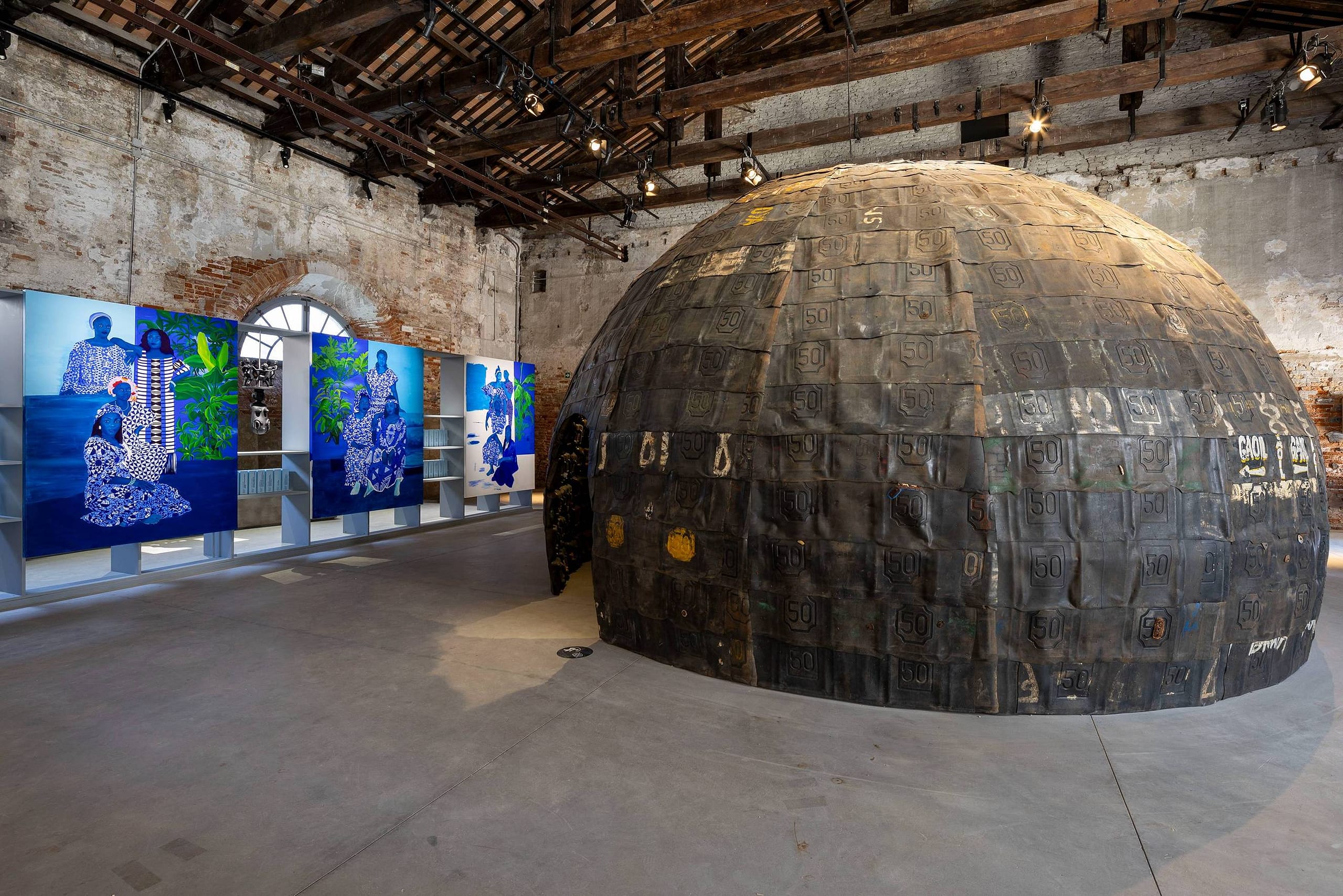
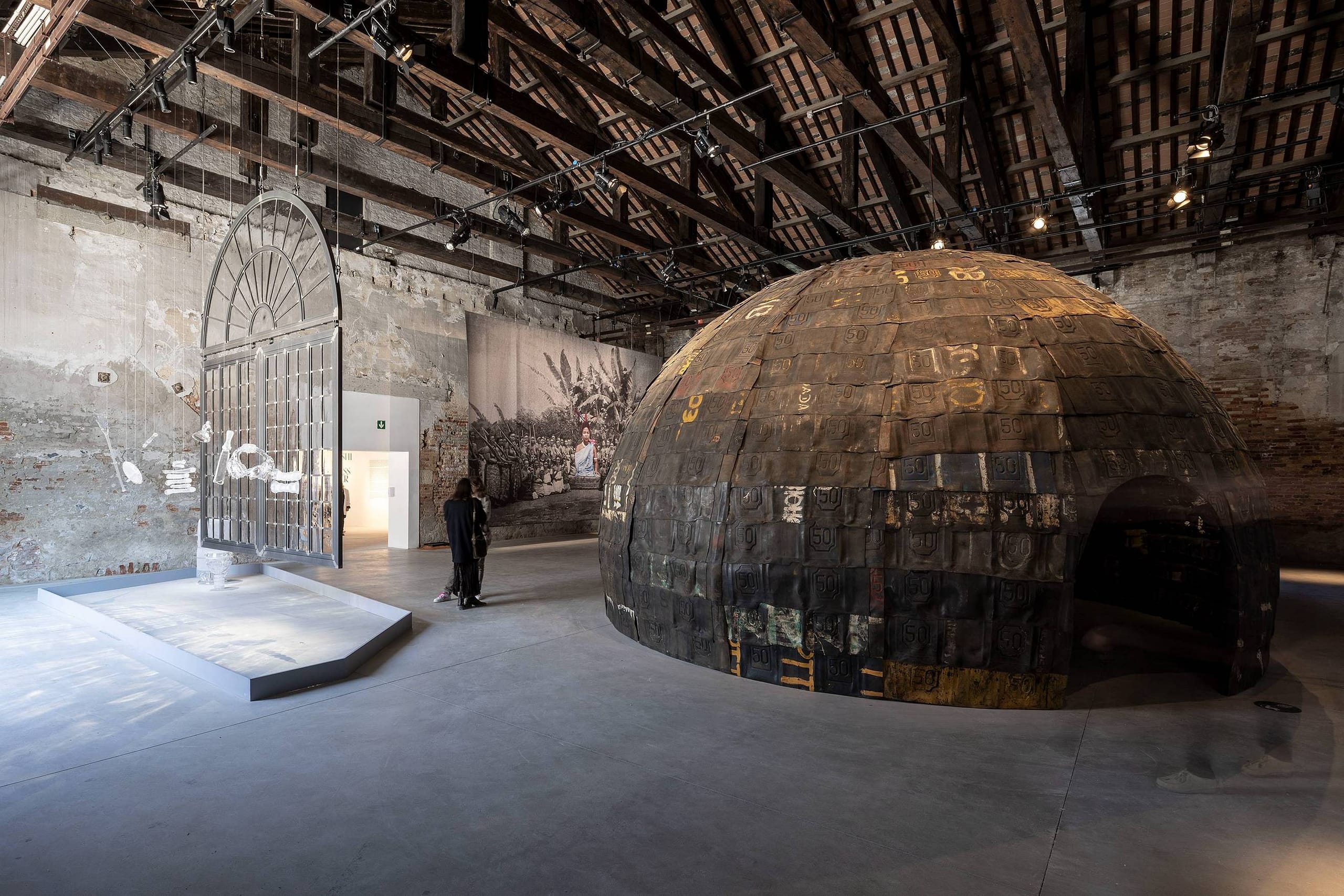
The first Benin Pavilion at the Venice Biennale, curated by Azu Nwagbogu.
At the heart of the Venice Biennale’s 60th edition, the Benin Pavilion unveils its debut showcase, offering an anthropological exploration of history, culture, heritage and feminism under the expert curation of Azu Nwagbogu, founder and director of the African Artists’ Foundation (AAF). Nwagbogu’s forté is developing new models of engagement on issues of decolonisation, restitution, and repatriation. In his approach, the exhibition becomes an experimental site for reflection, civic engagement, ecology, and repatriation, both material and immaterial.
The exhibition titled Everything Precious Is Fragile draws inspiration from Benin’s cultural custodians — historians, chief priests, and voodoo masters — those with wisdom, information and knowledge. As the curator, Nwagbogu approached the exhibition ethnographically, asking pertinent questions about what these custodians felt about current affairs in the world today. The common response: women have been displaced from their traditional role of equality and power in society. The resilience of women across Benin’s history juxtaposes life’s fragility and vulnerability — an aspect that Nwagbogu advocates for embracing rather than fearing. The exhibition is inspired by the Gèlèdè philosophy, which focuses not only on fertility and motherhood but also on correct social behaviour within society. Nwagbogu worked alongside co-curator Yassine Lassissi and scenographer Franck Houndégla to select four major artists to provide works for the pavilion: Chloé Quenum, Moufouli Bello, Ishola Akpo, and Romuald Hazoumè. Each artist exhibited works that complemented one another, forming a presentation that brings to life the fragility and resurgence of indigenous wisdom, with a focus on the return to mother nature. “Through the exhibition, we challenge the epistemic injustice of the silencing of indigenous voices all over the world,” says Nwagbogu.
The pavilion itself transcends the viewer into a quiet, almost sacred, space that opposes the quotidian vexations of modern life. As soon as you step in, you can feel a sense of sentimentality and consideration: “This curatorial concept serves as a response to the fragile state of our world,” says Nwagbogu.
This is characterised not only by ecological crises, conflicts, and escalating social and economic disparities but also by the systemic marginalisation of diverse and indigenous knowledge systems.”
Everything Precious Is Fragile brings forth Benin’s cultural heritage to the world. Nwagbogu’s Pan-Africanist approach continues to push the boundaries of telling African stories on a global scale — where they have always deserved to be told. The exhibition encourages the viewer to reflect on the way we treat the things that are most important to us — to embrace what matters most.