Manor visits ‘Seydou Keïta: A Tactile Lens’
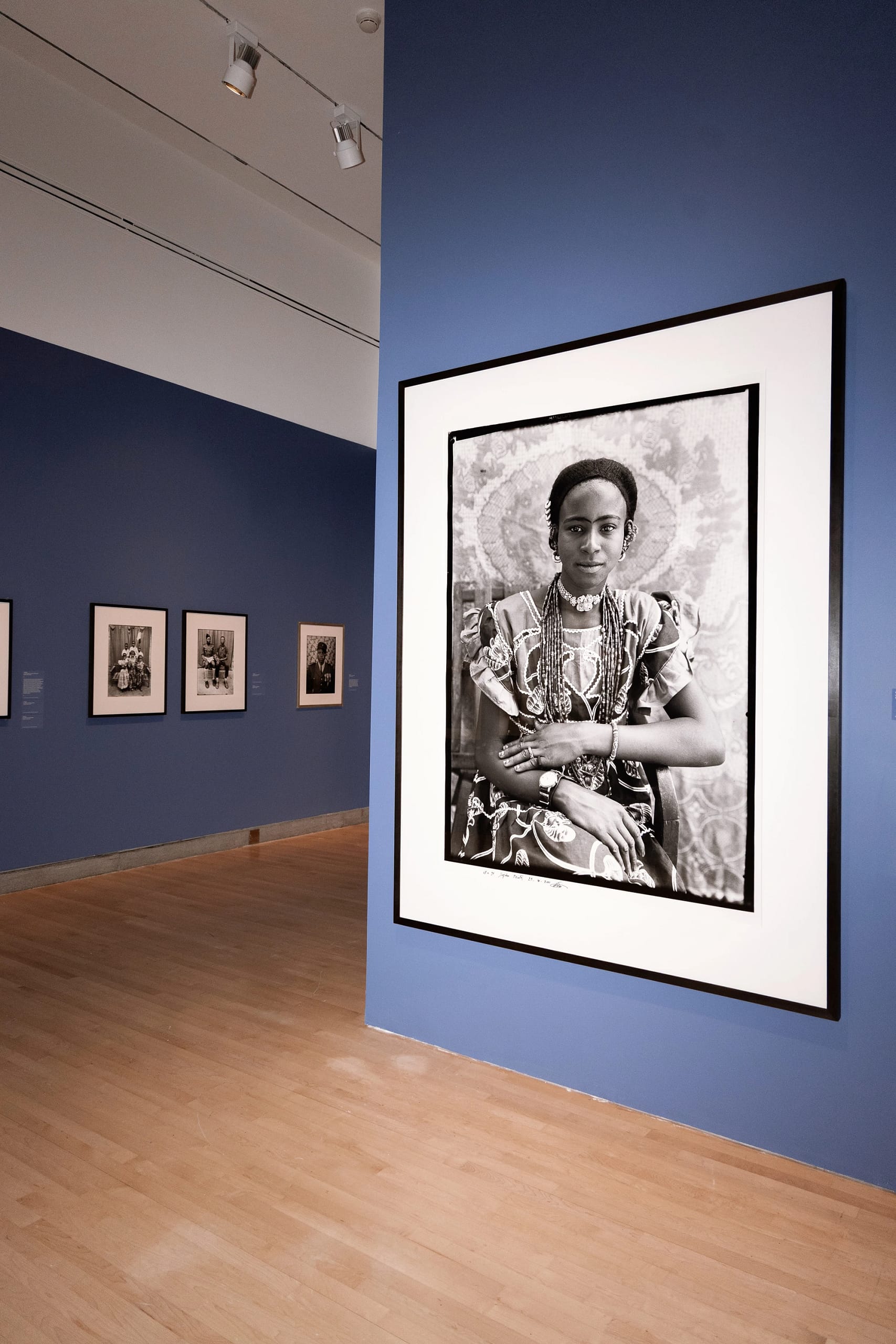
A landmark exhibition opened at the Brooklyn Museum on 10 October, celebrating one of Africa’s most revered photographers, Seydou Keïta, a pioneer whose lens defined an era of cultural rebirth. ‘Seydou Keïta: A Tactile Lens’ is the most expansive North American exhibition of the legendary Malian photographer’s work to date. More than 280 works, including iconic prints, never-before-seen portraits, textiles, and Keïta’s personal artefacts, are brought to life with unique insights from his family.
Among the visitors to the exhibition was Manor’s Trevor Stuurman, one of South Africa’s leading visual storytellers, whose own work is also deeply rooted in African identity and aesthetics. “Seeing Seydou Keïta’s work in a space like the Brooklyn Museum reaffirms that African narratives belong at the centre, not the periphery, of global art history,” says Stuurman. “His portraits were always world-class. The institution simply catches up to what his lens already declared: that beauty, dignity, and self-definition have always lived in Africa.”
Working in Bamako during the 1940s and 1950s, Keïta captured the beauty and self-fashioning of postcolonial West Africa. His portraits, exquisitely composed and deeply personal, chronicled a society in motion, as Mali emerged from French rule into independence. Keïta recorded Mali’s evolution through their choices of backdrops, accessories, and apparel — from traditional finery to European suits. These bold yet sensitive photographs began to circulate in West Africa nearly 80 years ago. In the early 1990s, they reached Western viewers, rocking the art world and cementing Keïta as the premier studio photographer of 20th-century Africa. “Seeing Keïta’s work in an institution like the Brooklyn Museum reaffirms how our local stories can live on global walls. His portraits were first made for his community, people dressing in their best, declaring their dignity and style in post-colonial Bamako,” adds Stuurman. “His inclusion shifts the gaze, from being ‘discovered’ to being honoured, and helps the world see Africa not as a subject, but as an author.”
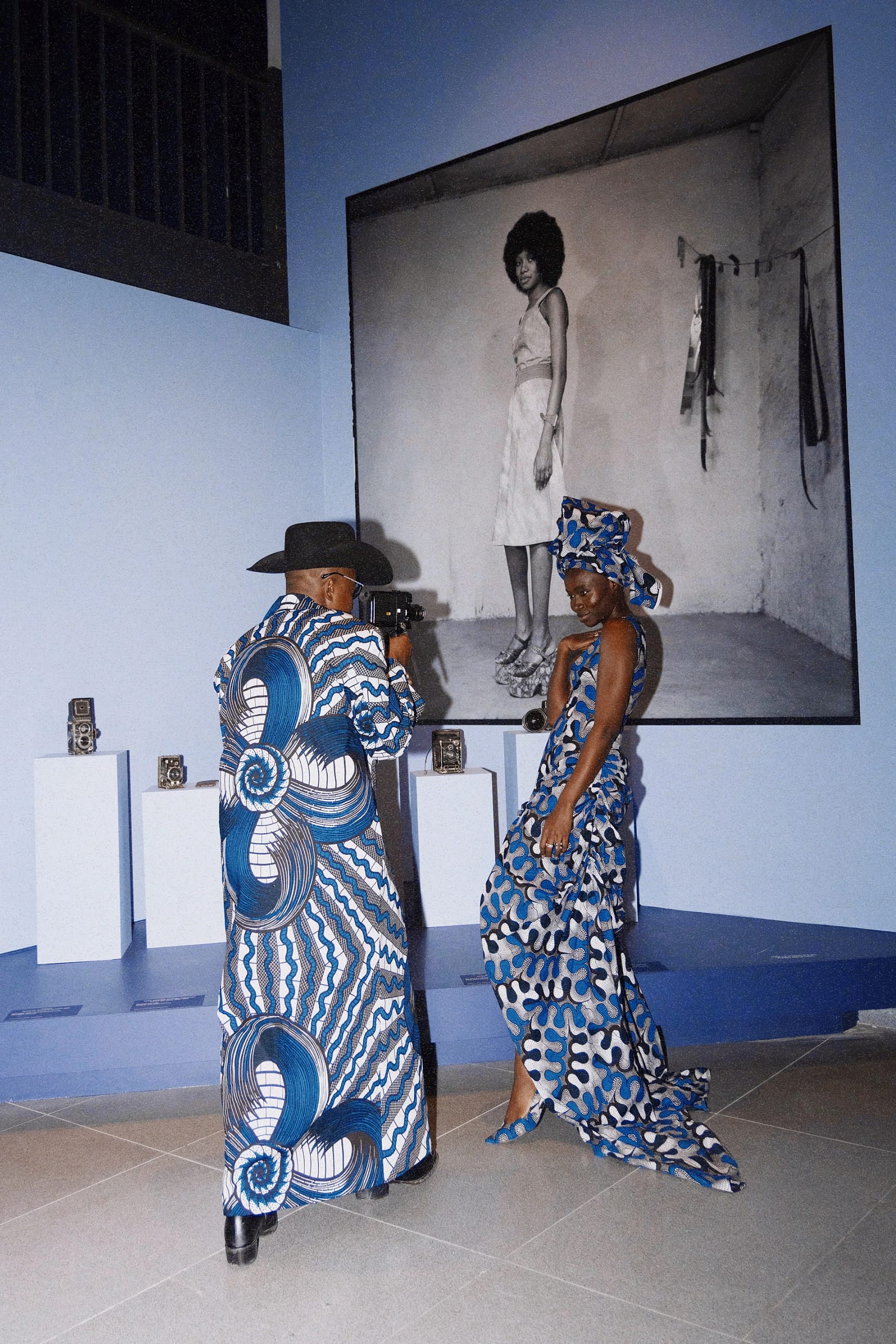
Honouring Seydou Keïta, Trevor Stuurman and Paris-based designer and entrepreneur Sarah Diouf co-directed a shoot, uniting fashion and photography in a narrative of legacy and self-representation. The shoot created looks that frame Vlisco prints in a distinctly modern language, referencing Keïta’s signature poses, angles, and symbolic objects, but reimagining them in colour, bringing new vibrancy to Keïta’s timeless style.
For Sarah Diouf, Seydou Keïta’s work is deeply personal, as his black-and-white portraits sparked an early fascination with African storytelling, meandering into her own brand, Tongoro, where black and white remain central. Stuurman feels connected to history, to home, and to the enduring elegance of our people — a motif that runs prominently through Keïta’s work. As someone who has also exhibited at the Brooklyn Museum, visiting this exhibition felt like a full-circle moment: “To share space with someone who paved the way for how we see ourselves was deeply humbling,” he adds. “His sensitivity to fabric, posture, and still presence deeply shaped how I approach composition — seeking and seeing beauty in the smallest details.”
A fully illustrated catalogue published by DelMonico Books accompanies the exhibition, bringing together new research on Keïta’s practice and Malian material culture. Essays by Drew Sawyer, Howard W. French, Duncan Clarke, Awa Konaté, Sana Ginwalla, and Jennifer Bajorek expand the conversation, tracing how his portraits have shaped the visual language of African modernism.
Curated by Catherine E. McKinley and Imani Williford, ‘Seydou Keïta: A Tactile Lens’ is on view at the Brooklyn Museum until March 8, 2026 — a tribute to a photographer whose work continues to define the soul of a continent in transformation, revealing not only Malians’ emotional landscapes, but also the textures of life in a rapidly changing country. “This exhibition means our narratives are no longer footnotes. They’re centre stage, shaping how the world sees beauty and history,” concludes Stuurman.