In conversation with Kevin Boakye, co-founder of WAV Festival
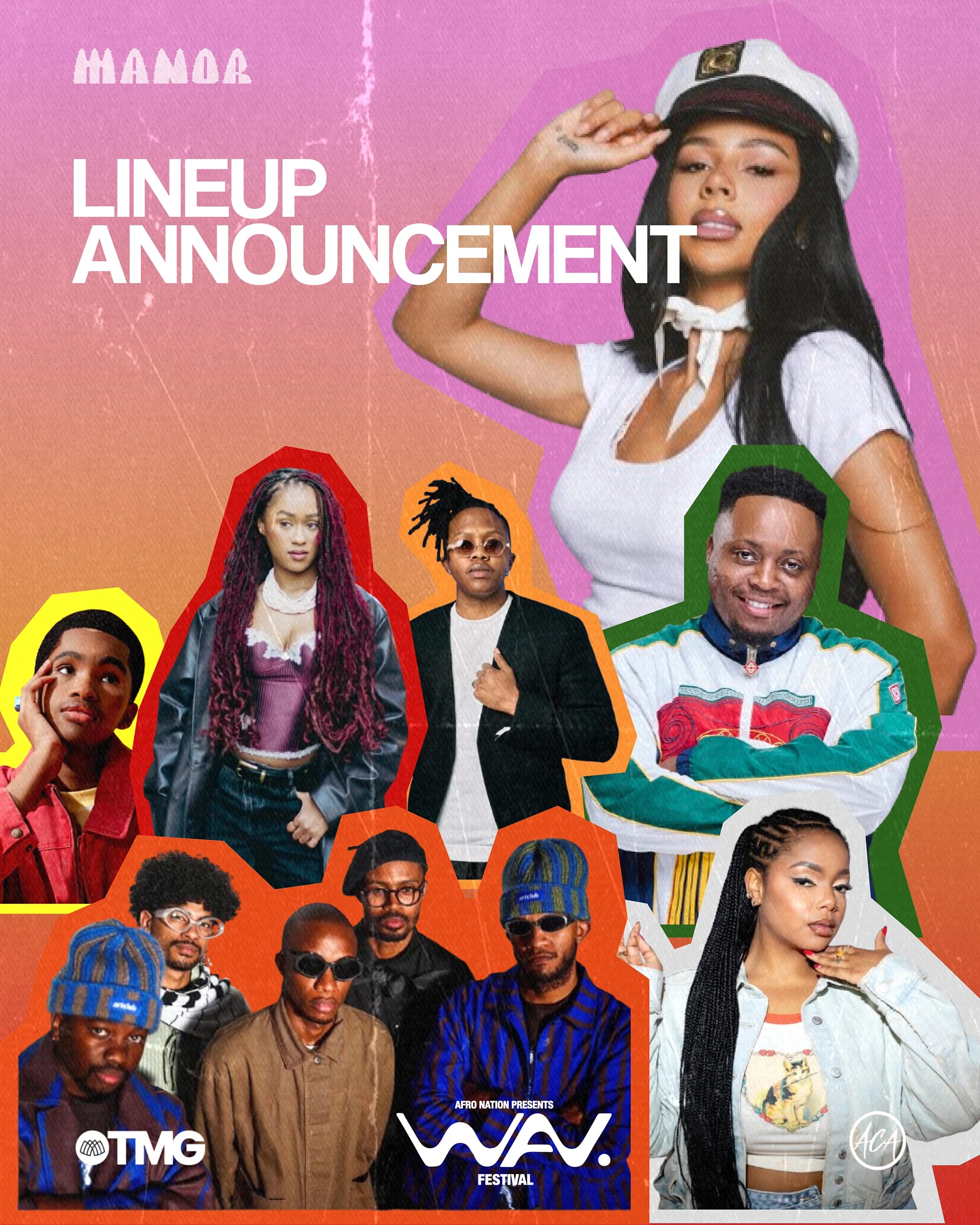
WAV Festival is arriving in Cape Town on 2 January 2026, highlighting the richness and innovation of R&B, soul, and alternative music. Bringing together trailblazing artists for a celebration of African and diasporic culture, the festival moves with a clear intention: to reframe R&B from an African point of view. Blending global icons with local pioneers, and music with fashion, food, and storytelling, WAV extends beyond the stage and into a broader vision of African creativity.
At the centre of this ambition is Kevin Boakye, co-founder of Africa Creative Agency (ACA) and a driving force behind WAV. Boakye is an experienced investment executive with over 15 years of experience in private equity and investment banking. He also brings unique insight into the intersections of gaming and music, including leading business development for Africa’s leading mobile games publisher, Carry1st. For Boakye, music is about feeling, context, and cultural integrity. As WAV prepares to arrive in Cape Town next January, he is clear that the festival is not conceived as a conventional live event, but as a carefully curated emotional and cultural journey.
“When we were curating this lineup, it was really about creating a lineup that’s going to take people on an emotional journey, on a sonic journey, on a spiritual journey that feels in tune with how we want to reimagine R&B within the African context,” he says.
That intention is evident in the diversity of artists on the bill. At first glance, someone like Wale might seem like an unexpected choice for an R&B-led festival, but for Boakye, the logic is obvious. “You might think a hip hop artist like Wale doesn’t fit the bill of an international show,” he explains. “But when you think about his catalogue, he’s got songs like Matrimony featuring Usher, Diced Pineapples with Rick Ross and Drake, Lotus Flower Bomb. So, he’s got a really soulful R&B bag. So, putting artists like that on the bill is super, super important.”
Equally important is honouring artists who have shaped South Africa’s R&B landscape. “Someone like Shekhinah was one of the first folks who came to mind,” Boakye adds. “She’s had a long-standing influence on the South African R&B genre, and I think on the African R&B market more broadly. Having an opportunity for her to touch a stage alongside some global greats is really important.”
While WAV centres R&B, Boakye is adamant that the festival must also reflect South Africa’s broader musical contribution to the world. “We’re still in South Africa,” he says. “A genre like Amapiano has given this country so much in terms of that initial foray into the global popular music scene.” For him, Kelvin Momo’s inclusion was a natural extension of the festival’s emotional intent. “He’s a specialist. When you hear a Kelvin Momo set, you feel that set deeply. It transcends you into a different type of vibe.”
That emotional resonance — what audiences feel when they leave — is central to ACA’s vision as a whole. “It’s not necessarily just the music,” he says. “When you walk out of an event, what’s that feeling that you had? Those highs at the event, when your favourite song was played, what’s that emotional driver there?”
Beyond the stage, WAV is imagined as a fully immersive cultural experience merging sound, style, and storytelling. Boakye is acutely aware of how African culture is often diluted on the global stage and feels that it is essential that the festival is executed within an African context and the overall culture of the continent. This philosophy informs everything from the festival’s visual language to its hospitality and Africa House experiences.
At its core, WAV is about asserting Africa’s place within global Black culture. “Africa has long had a presence in R&B,” Boakye says. “We’re one of the biggest consumers of the genre globally as well. And we also have a place now as a hub for creativity and talent.” For diasporans travelling to South Africa for the festival, he sees WAV as an invitation to experience the continent’s depth. “This is an important time to highlight all the diversity and all of the different dynamics that South Africa, in particular, has to offer the world in terms of our talent, our creativity, our presence, our impact.”
Pulling off a festival of this scale, he notes, has required a vast collective effort. “Everything that’s being done to mobilise a festival of this magnitude has required a Herculean effort from a multitude of African creators across so many different sectors, from production to staging, to logistics, to the crew.” For Boakye, that visibility matters. “It’s really important that people see that this is possible — to have events of this quality on the continent, that people would travel internationally to come and experience.”
Ultimately, WAV Festival is about reminding Africa — and the world — of what’s already within reach, setting a new standard for events on the continent, and delivering a celebration rooted in collaboration.