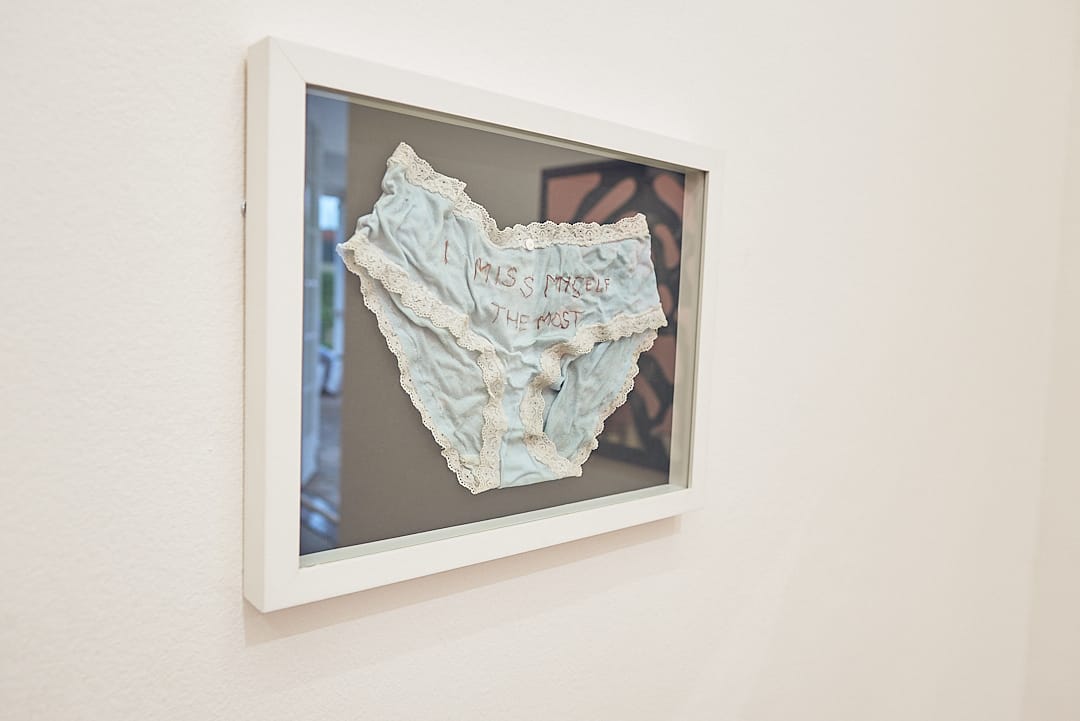
I miss myself the most: a group exhibition at Stevenson
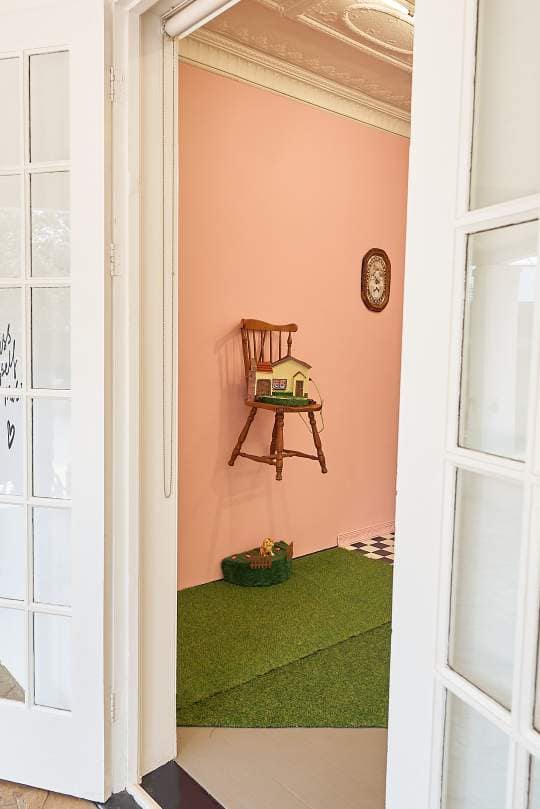
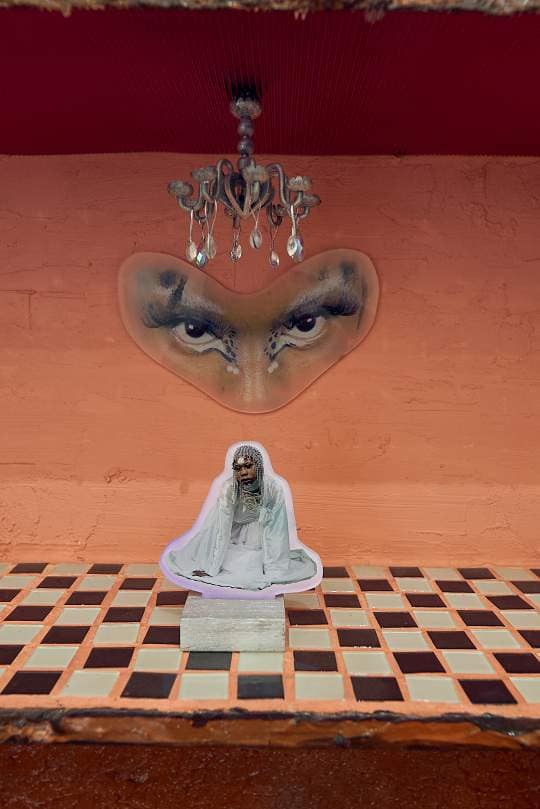
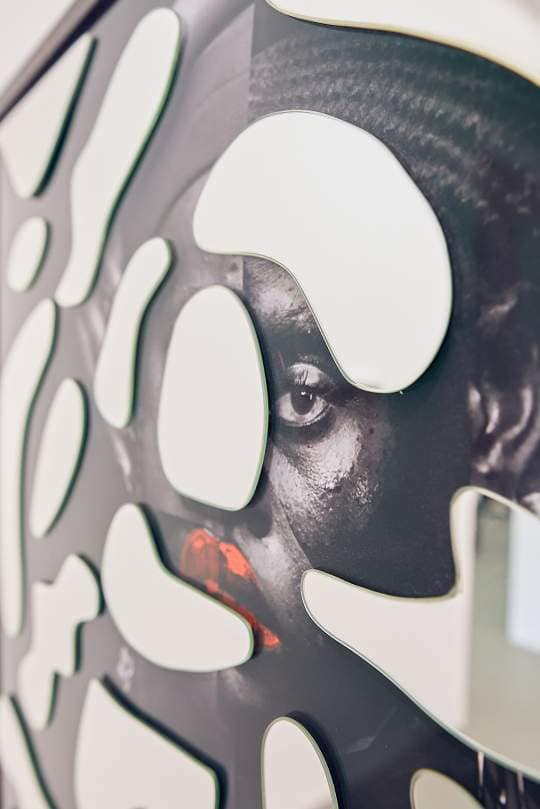
Curated by Aza Mbovane and Mosa Molapo, Stevenson’s latest exhibition, I miss myself the most, delicately guides the viewer into contemplation, with different artworks strategically occupying spaces to prompt an abstract thought process that engages with memory-making and the role played by imagination and fantasy in the practice of remembrance.
The participating artists engage with the weight and insistence of imagination in individual and collective memories. Imagination becomes a focal point; an entryway to longing, solace or reflection; or even a malleable tool that makes us (mis)remember moments.
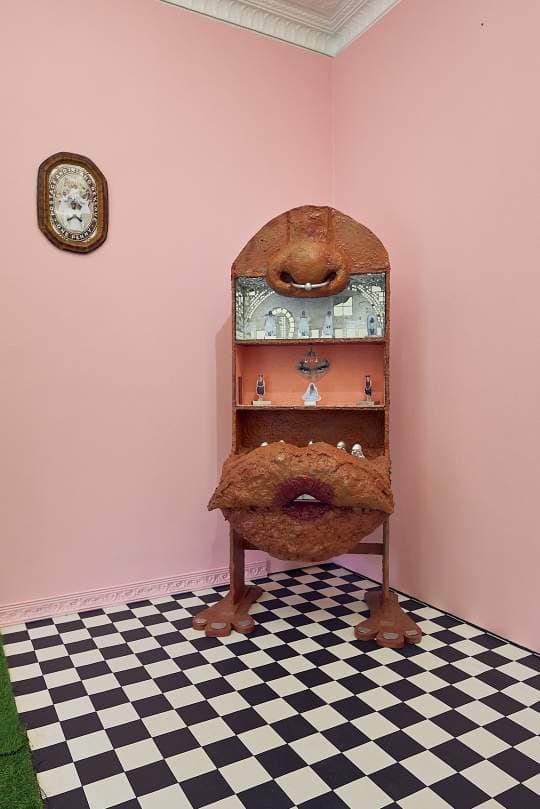
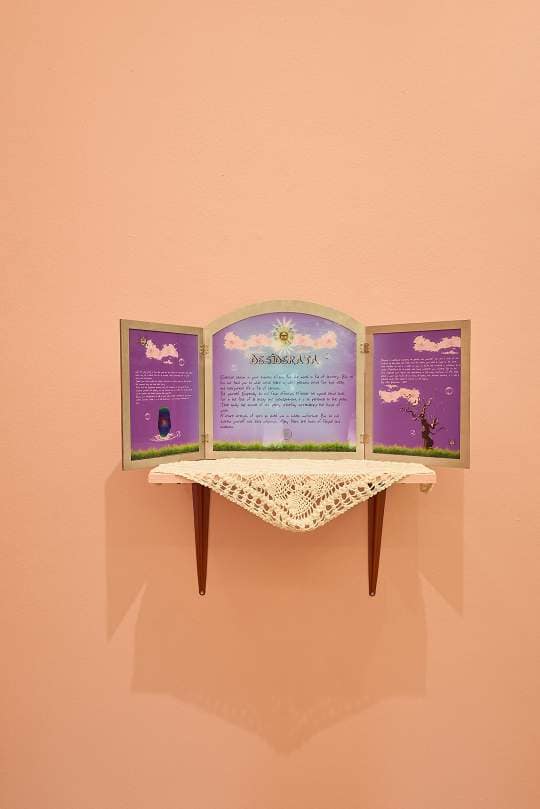
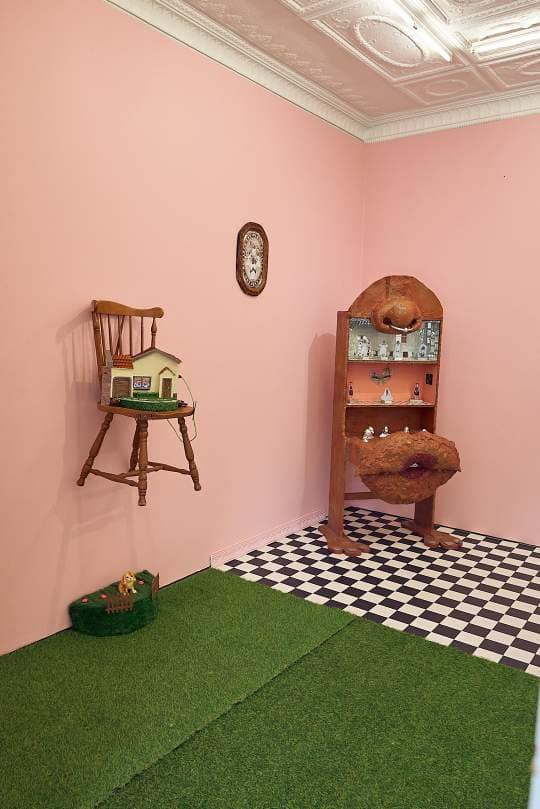
Installations by Natalie Paneng and Allyssa Herman showcase the intimacy of memory as it evolves, while also staying frozen in time. Paneng, a ‘world and multiverse builder’, stages an installation around an anthropomorphised room-divider titled Ke Thlogo (‘It’s a head’ in Setswana) with feet, nose and mouth modelled after the artist. In Herman’s installation, Solitude, the artist references her grandmother’s kitchen with vinyl flooring, kitchen furnishings and wallpaper. She extends an invitation to the nostalgia of her upbringing, using this setting to explore feelings of isolation, articulated through a single chair at the table and a directed spotlight above the scene.
Motlhoki Nono’s work placed on the wall in the doorway imagines a kiss from an unseen angle, capturing this intimate encounter from a slightly distorted and grotesque lens, while Frida Orupabo uses found archival material to collage a nude figure turned inwards and away from prying eyes, emphasising the tension between private meditation and public perception.
Lebohang Kganye and Sosa Joseph contend with alternative memory-making by working within the intersection of national histories and individual moments, and the process of re-inscribing and re-imagining figures who have been omitted from those archives. Kganye’s works form part of her series In Search for Memory, whereby she stages and photographs interpreted scenes using cardboard cut-outs, furniture from her grandmother’s house, and silhouettes from family albums to present a personalised connection to this fictional history, playing with myth and truth.
Also featured in this group exhibition is Mame-Diarra Niang, who offers an abstracted ‘non-portrait’ alongside Lunga Ntila’s collage portrait which explores the layers of the self that cannot be easily captured or placed. Mankebe Seakgoe’s, I Had a Dream…and Then There Was Fire, was created in a meditative state and includes a loose calligraphic non-language of the artist’s own making. Reflecting on self and image, Seakgoe says, “In a way, these feel like portraits. They are parts of me that feel the closest to me, the parts of me that I can see.”
I miss myself the most moves across the dialectical relationships that memory occupies in spaces, bodies and abstraction, using imagination as a guide to grapple with the inconsistencies of recollection, and the longing to reconnect with time, feelings and moments passed.





The exhibition runs until 2 February at Stevenson Johannesburg.
Featured artists:
Allyssa Herman
Aneesah Girie
Frida Orupabo
Lebohang Kganye
Lunga Ntila
Mahube Diseko
Mame-Diarra Niang
Mankebe Seakgoe
Motloki Nono
Natalie Paneng
Simnikwe Buhlungu
Sosa Joseph
Steven Cohen